Sooner or later, most concealed carry owners end up comparing leather and Kydex. Both have loyal fans and both can work well, but they feel very different once you’ve worn them for a full day.
Leather tends to become more comfortable as it breaks in and has a classic look that doesn’t really go out of style. Kydex gives you a rigid shell, consistent retention, and very little maintenance. Below, we compare leather vs Kydex holster options across different factors so you can decide which one fits your carry routine.
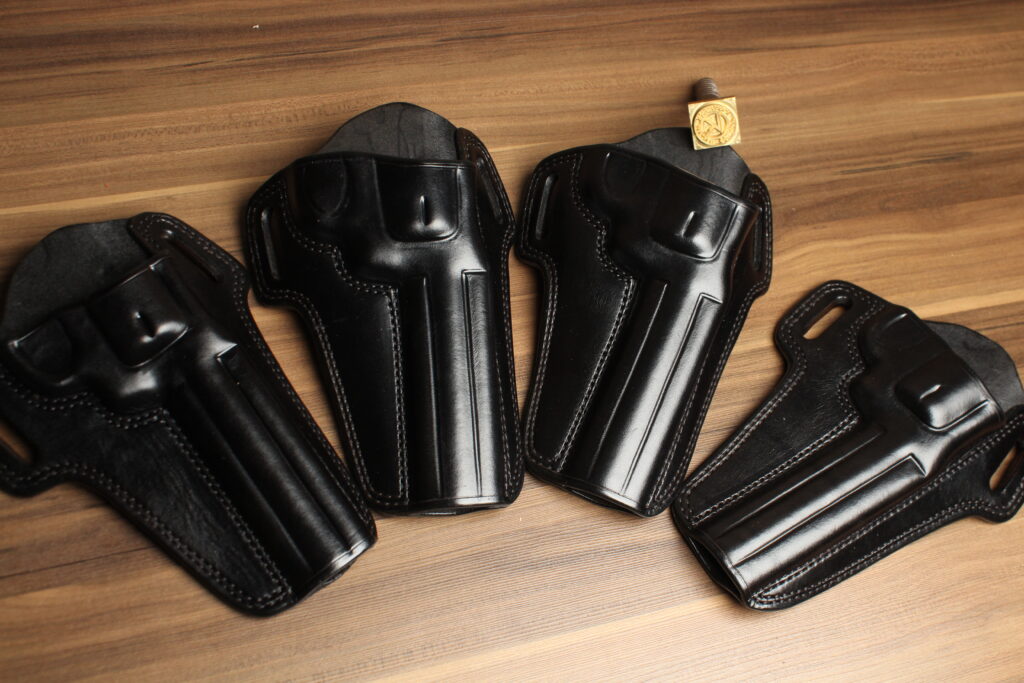
What Makes a Leather Holster and Why It Still Holds Up
Leather has been used for holsters for generations, and there’s a reason it’s still around. A well-made leather holster combines a close firearm-specific fit with a material that becomes more comfortable and personal the longer you use it.
Cut, Dyed, and Molded by Hand
A leather holster starts with a hide that’s cut, dyed, and molded around a specific firearm. Saddle leather and other heavy cowhides are common choices because they’re thick enough to hold their shape while still being flexible enough to form closely around a pistol.
That molding is what creates the fit. Once the leather follows the firearm’s slide, trigger guard, grip, and overall shape, the gun settles into the same position each time it’s holstered.
Built for Years of Use
The leather itself is only part of the equation. Stitching, finishing, and edge work all play a major role in how well a holster holds up.
Kirkpatrick uses seven-cord bonded nylon thread and double stitches critical areas of its leather holsters. The edges are sanded and hand burnished to help keep moisture from working its way into the leather.
Comfort, appearance, and a long history of use are a big part of leather’s appeal. Leather gun holsters carried revolvers long before polymer holsters existed, and generations of makers have continued refining the material since. For plenty of firearm enthusiasts, quality leather is still the standard they compare everything else against.
What Makes a Kydex Holster
Kydex takes a very different approach. It’s a thermoformed acrylic and PVC polymer that was originally used in aircraft interiors and later became a popular holster material.
To make a Kydex holster, a flat sheet is heated until it becomes flexible and then pressed around a specific firearm. Once it cools, it hardens into a rigid shell that closely follows the gun’s outline.
That process makes the fit very repeatable from one holster to another. Unlike leather, Kydex doesn’t need time to break in and won’t gradually change shape through normal wear.
It’s the newer, more tactical-looking option, and there’s plenty to like about it. Kydex holsters can be thin, lightweight, and ready to use straight out of the box. They’re also widely available for popular pistols, including many Sig Sauer and Glock models.
If you want something consistent, modern, and easy to maintain, Kydex is a solid option. Any fair Kydex vs leather holster comparison should acknowledge that.
Our Popular OWB Holsters
-

Red Dot Holster – Model 2022
$150.00 – $260.00Price range: $150.00 through $260.00 This product has multiple variants. The options may be chosen on the product page -


Kirkpatrick Under Cover OWB Holster – Model 2010
$130.00 – $200.00Price range: $130.00 through $200.00 This product has multiple variants. The options may be chosen on the product page -


Kirkpatrick Texas Cross Draw OWB Holster – Model TCD
$130.00 – $200.00Price range: $130.00 through $200.00 This product has multiple variants. The options may be chosen on the product page -


Kirkpatrick Texas Strong Side OWB Holster – Model TSS
$130.00 – $200.00Price range: $130.00 through $200.00 This product has multiple variants. The options may be chosen on the product page
Comfort Comparison
Comfort is one of the biggest differences between the two materials, especially if the holster stays on your belt for most of the day. What feels fine for an hour at the range can feel very different after eight or ten hours of sitting, walking, bending, and driving.
Leather Softens with Wear
Leather gradually relaxes as you use it. Over the first few weeks, it begins molding not just to the firearm but to the way it sits against your body.
That slight amount of flex is a big part of the appeal. A leather backing can move with you when you sit down, bend over, or climb into a vehicle instead of keeping the same rigid shape no matter what you do.
Once it’s properly broken in, many carriers find that the holster becomes much less noticeable during everyday wear.
Kydex Stays Rigid
Kydex behaves almost exactly the opposite way. Its rigidity helps stabilize the firearm, but that same feature can make extended wear less forgiving.
With Kydex IWB holsters in particular, the hard shell sits between your body and your belt. Depending on the design and your body type, edges and corners can become noticeable after several hours and may also show more through clothing as you move.
Heat can make those differences more obvious too. Sweat and friction around hard plastic edges may become uncomfortable during long days in warmer climates, especially for people with slimmer builds.
If you carry for most of the day, comfort deserves plenty of weight in the decision.
Our Popular IWB Products
-


Kirkpatrick Clip On IWB Holster
$48.00 This product has multiple variants. The options may be chosen on the product page -


Kirkpatrick Hidden Defense IWB Holster
$155.00 – $225.00Price range: $155.00 through $225.00 This product has multiple variants. The options may be chosen on the product page -


Kirkpatrick Commander Carry IWB Holster
$150.00 – $240.00Price range: $150.00 through $240.00 This product has multiple variants. The options may be chosen on the product page
Retention and Draw
Kydex has a clear advantage when it comes to consistent passive retention. That doesn’t mean leather can’t hold a firearm securely, but the two materials achieve retention in different ways.
Kydex Offers Consistent Retention
One of Kydex’s biggest strengths is how consistently it holds its shape. The firearm seats into the molded shell with a positive fit, often with an audible click.
Because the material doesn’t soften through normal use, that passive retention tends to remain predictable over time. The rigid mouth also stays open after the draw, which makes one-handed reholstering straightforward.
Leather Can Change With Time
Leather naturally flexes and relaxes as it ages. Over enough use, a poorly made holster can loosen, and an unreinforced mouth may begin to close once the firearm has been drawn.
Some leather designs use a thumb break for additional security, although not every carrier wants another step in the draw.
Much of the difference comes down to construction. Heavier leather, precise molding, and a reinforced mouth can help a leather holster maintain its shape much better over the long term.
How Leather Narrows the Gap
Hybrid holsters combine a leather backing against the body with a Kydex shell around the firearm. That gives the wearer a softer contact surface while keeping a rigid holster mouth.
Other designs use tension screws to make retention adjustable as materials settle over time. With an all-leather holster, careful molding, heavier material, and reinforcement around key areas all help maintain a secure fit.
One thing worth being clear about is that Kirkpatrick makes leather holsters exclusively. We don’t manufacture Kydex, hybrid, or nylon holster designs, so those options aren’t part of our catalog.
Durability and Aging
Both materials can last a long time, but they age in completely different ways. Kydex is designed to resist change, while leather gradually develops character with use.
How Kydex Holds Up
Water, sweat, oils, and many common solvents don’t bother Kydex much. It won’t absorb moisture, swell, or rot, which makes it particularly practical in wet environments.
Its weakness is physical stress. Hard impacts or repeated stress around mounting points can eventually cause cracking, and very cold temperatures can make some plastics more brittle.
When a Kydex shell fails, replacement is usually the practical solution rather than repair.
How Leather Ages
Leather asks for a little more attention, but quality leather can last for decades when it’s looked after properly.
Moisture, heavy sweat, and neglect can eventually dry or damage the material. With routine care, though, the finish tends to deepen, the leather develops a patina, and the fit settles naturally around the firearm.
A worn leather holster can often be conditioned, refinished, or restored rather than immediately replaced.
The two materials follow very different philosophies. Kydex aims to stay almost unchanged for as long as possible, while leather changes gradually and can become more personal with age. Good stitching matters here too, since bonded nylon thread and reinforced seams help keep a leather rig together at its highest-stress points.
Weather, Moisture, and Maintenance
Where you live and how you use the holster can make this decision much easier. Kydex requires very little attention, while leather benefits from a small amount of routine care.
Kydex Is Mostly Rinse and Go
Kydex is about as low-maintenance as holster materials get. If it becomes dirty, you can usually wash it with soap and water, dry it, and move on.
Humidity and sweat won’t soak into the material, which makes it especially convenient in hot or wet climates.
Leather Needs a Little Upkeep
Leather needs occasional conditioning to stay supple. If it’s ignored for long enough, it can dry out and eventually crack, while leather that stays damp in a closed space can develop mildew.
After a particularly sweaty or wet day, wipe the holster down and let it air dry away from direct heat. Conditioning it a few times a year is usually enough for normal use.
Climate matters here. Humid environments and work around water, such as boating, fishing, or coastal jobs, tend to favor Kydex because it simply doesn’t care about moisture.
In drier conditions, leather maintenance is much less demanding than it sometimes sounds. A short care routine can keep a quality holster in good condition for years. Hunters and range shooters who regularly deal with mud and rain should still be realistic about how much maintenance they’re actually willing to do.
Looks, Customization, and Your Unique Style
A holster is functional equipment, but that doesn’t mean appearance is irrelevant. If something is going to spend years on your belt, it’s perfectly reasonable to care how it looks.
Leather and Kydex offer very different kinds of customization.
Kydex Has a Modern Look
Kydex comes in a wide variety of colors and patterns, usually with a modern or tactical feel. Camo finishes, carbon-fiber-style textures, and bright colors are all easy to find.
Most customization happens at the surface level through colors and printed patterns. A rigid polymer shell doesn’t lend itself to traditional tooling or engraving in the same way leather does.
Leather Can Become One of a Kind
Leather gives a maker much more room for hand finishing. It can be dyed, tooled, engraved, burnished, and personalized in ways that change both its appearance and texture.
It also continues changing after you buy it. The patina that develops through years of handling and wear gives each holster a look that’s difficult to duplicate.
That’s an area where Kirkpatrick puts particular emphasis. Our custom leather work includes tooling and monogramming, giving owners the option to make the holster feel unmistakably their own.
There’s a little identity wrapped up in the material choice too. Kydex feels practical, modern, and utilitarian. Leather tends to appeal to people who appreciate craftsmanship, traditional gear, and the history behind it.
For collectors and traditionalists especially, a well-made leather rig can feel like a natural companion to the firearm it was built around.
Kydex or Leather: Which One Should You Actually Carry?
There isn’t one universal winner. The right holster depends on where you carry, how long you wear it, what kind of maintenance you’re willing to do, and what feels best for your preferred carry position.
Quick Outlook
For most owners, the decision usually looks something like this:
- Range and duty carry often favor Kydex, especially when consistent retention and easy cleanup are high priorities
- Everyday carry and heirloom-quality gear tend to favor leather, where comfort, longevity, and appearance carry more weight
- Some owners keep both and use one for training or wet conditions and another for everyday wear
Those are useful starting points rather than hard rules. Your own routine should ultimately decide which trade-offs matter most.
Match the Holster to How You Carry
If you’re shopping for something to wear hunting, at the range, or around the ranch, a leather OWB setup is worth considering. Our OWB holsters offer outside-the-waistband carry with traditional belt-loop designs.
For everyday concealment, IWB holsters sit closer to the body and generally ride flatter under clothing. Our concealment lineup also includes shoulder holsters for people who prefer that style of carry.
The holster is only one part of the setup. A sturdy EDC gun belt helps support the weight and keeps the holster sitting where it should.
If leather ends up being the better fit for you, Kirkpatrick’s handmade holsters are built one at a time in Texas and molded for the firearm they’re designed to carry.
Why Leather Suits Most Everyday Carriers
Both materials have genuine strengths, so there’s nothing wrong with choosing either one. Kydex offers crisp, repeatable retention, easy cleanup, and very little maintenance, making it particularly useful at the range or anywhere moisture is a regular concern.
For everyday carry, though, comfort and how the holster feels after years of use often matter more. Leather gradually adapts to the wearer, and good construction addresses many of the issues people associate with the material.
A precise mold, reinforced mouth, strong stitching, and occasional conditioning can all help manage loosening and moisture concerns. Kydex’s trade-offs, including rigidity, hard edges, and noise, are harder to change because they come directly from the material itself.
There’s also something to be said for how the two age. Leather develops around its owner and gains character with use, while Kydex is designed to stay much the same year after year.
For an everyday carry setup you expect to keep for a long time, that ability to improve with age is part of leather’s appeal. If you want a secure fit along with comfort and character, Kirkpatrick’s hand-molded leather holsters, made in Laredo since 1950, are worth checking out.