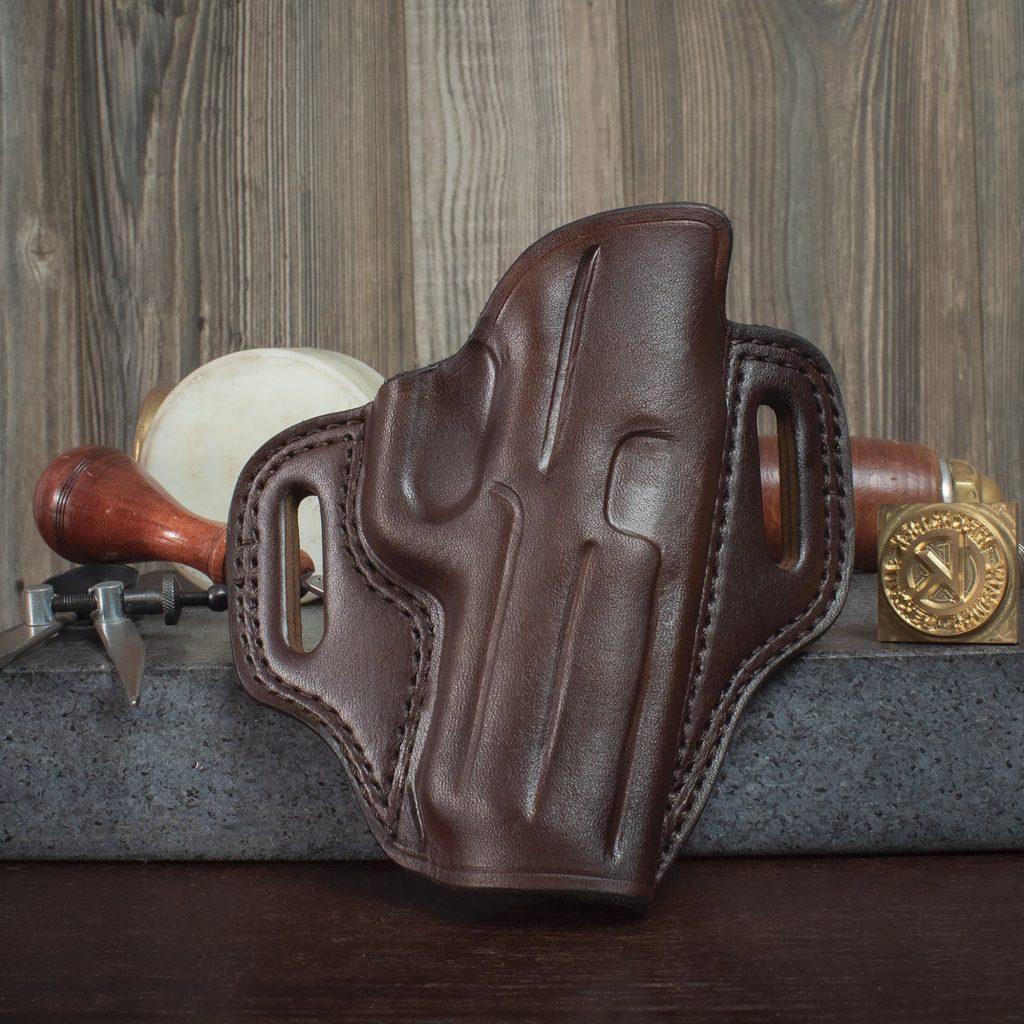
A duty holster should never feel like a burden. It should protect your firearm, stay comfortable through long shifts and support smooth, controlled access when things get tense. When a holster does its job right, you hardly notice it at all.
This guide explores what makes the best duty holster for working professionals. Kirkpatrick Leather Company has been building holsters one at a time since 1950 using American leather and traditional methods still practiced by our own shooters, hunters and daily carriers. The knowledge here comes from real use, not just theory.
What is a Duty Holster?
A duty holster is designed for open carry on a duty belt and must deliver three core benefits: secure retention, fast access and all-day comfort. That makes it very different from concealed carry holsters, which prioritize hiding the gun, or competition models that chase draw speed above all else.
Most duty holsters share common features such as reinforced mouths, strong belt attachments and a retention system built to resist grabs or accidental drops. Materials drive performance. Leather provides a natural, quiet draw and gradually conforms to the officer and the firearm. Kydex keeps a rigid shape that always locks the gun into place.
Craftsmanship separates dependable holsters from those that wear out or twist loose. Kirkpatrick uses seven cord bonded nylon thread, double stitching in stress areas and hardware sourced from American suppliers. The finish is polished and the edges are burnished to protect against moisture. Quality shows in the details.
What Makes the Best Duty Holster?
Performance defines the best duty holster, not flashy claims or excessive gadgets. The draw should feel the same in month twelve as it did during break-in and retention must always remain trustworthy.
Several features influence that performance:
- Retention Levels: Level I uses passive friction, Level II adds a secondary element like a strap or hood and Level III usually combines multiple systems for high-risk environments.
- Ergonomics: Grip accessibility and wrist alignment affect draw speed more than most people realize.
- Durability: Strong leather, reinforced stitching and solid hardware determine lifespan.
Mass-produced holsters often cut corners on fit. A hand-molded holster shapes to a specific firearm and guides the draw instinctively. At Kirkpatrick, molding and fitting are performed by leather workers who also carry the gear, which ensures form stays aligned with function.
How to Choose the Right Duty Holster for You
Your job assignment influences retention needs. Patrol officers usually require higher security because fights and physical contact are common. Tactical roles lean toward faster access while still maintaining safety. Investigators often look for comfort during long periods of seated work.
It helps to test a holster while moving:
- Sit in and out of a patrol vehicle
- Bend, reach and kneel
- Check for shifting or pinch points
Ride height and angle can help or hurt your draw, so look for configurations that allow some adjustment. The holster must match your firearm precisely. Close enough is not good enough when retention and safety are involved.
Appearance can matter too. Many departments prefer the traditional, professional look that leather holsters provide.
Leather vs Kydex for Duty Use
Both materials have advantages that serve different priorities. Leather feels more natural against the body and continues to improve with wear. Kydex provides crisp retention and holds its shape in rain and heat.
Although leather needs a bit more care, it rewards that attention with decades of reliable service. Kirkpatrick burnishes the edges and applies protective finishes to extend the life of every holster we make.
Uniformed professionals often appreciate how leather supports both comfort and presence during public interactions.
The Top Duty Holsters for Everyday Users
Kirkpatrick Model 2000 Challenger
The Kirkpatrick Model 2000 Challenger series is the perfect holster for off-duty and plain clothes officers. It comes in a full range of sizes for both automatics and revolvers, and it features fantastic retention and an offset slot that keeps the holster in place at the correct angle.
Kirkpatrick Commander Carry IWB
The Kirkpatrick Commander Carry IWB holster was designed for easy concealment without compromising pistol accessibility. It includes a leather shirt guard for comfort that does not interfere with your firearm draw. A small angle on the holster narrows the profile as well, making it more comfortable and concealable.
Caring for Your Duty Holster
Good maintenance habits keep any holster performing at its peak. Regularly wiping away sweat and dust prevents buildup that can weaken the leather or hardware over time. Occasional conditioning preserves flexibility while reinforcing the molded fit around the firearm.
Avoid leaving leather in high heat or moisture such as a vehicle dashboard. Inspect stitching and retention points periodically so issues are addressed early. Kirkpatrick offers guidance and uses durable American leather that holds up through years of daily carry when cared for properly.
Find Your Ideal Duty Holster
The best duty holster supports retention, comfort and a reliable draw every time. Handmade leather sets a high standard because craftsmanship reinforces performance from the first shift to the thousandth. Kirkpatrick’s seventy years of American made holsters reflect dedication to people who depend on their equipment every single day.
Ready to move into a holster you can trust for the long run? Browse Kirkpatrick’s handcrafted duty holsters today and choose the best duty holster for your shift so you can focus on the work, not the gear. Our team will help you find the right fit for your firearm, your assignment and your comfort.
Do you guys make a holster for the 1st generation sig sauer P365 AXG Legion with an sig Romeo red dot? Right hand OWB brown leather.